Community health sector launches campaign profiling staffing challenges and impact to patient care
Sector calls for investments to close the growing wage gap for frontline workers
Toronto, October 17, 2024 – Ten provincial associations representing Ontario’s community health sector are raising awareness of a growing wage gap impacting the care millions of Ontarians rely on.
A new campaign launched today, entitled For Us. For You., highlights the need for urgent investments in Ontario’s community health sector to ensure crucial services and supports remain available to meet the needs of Ontarians of all ages.
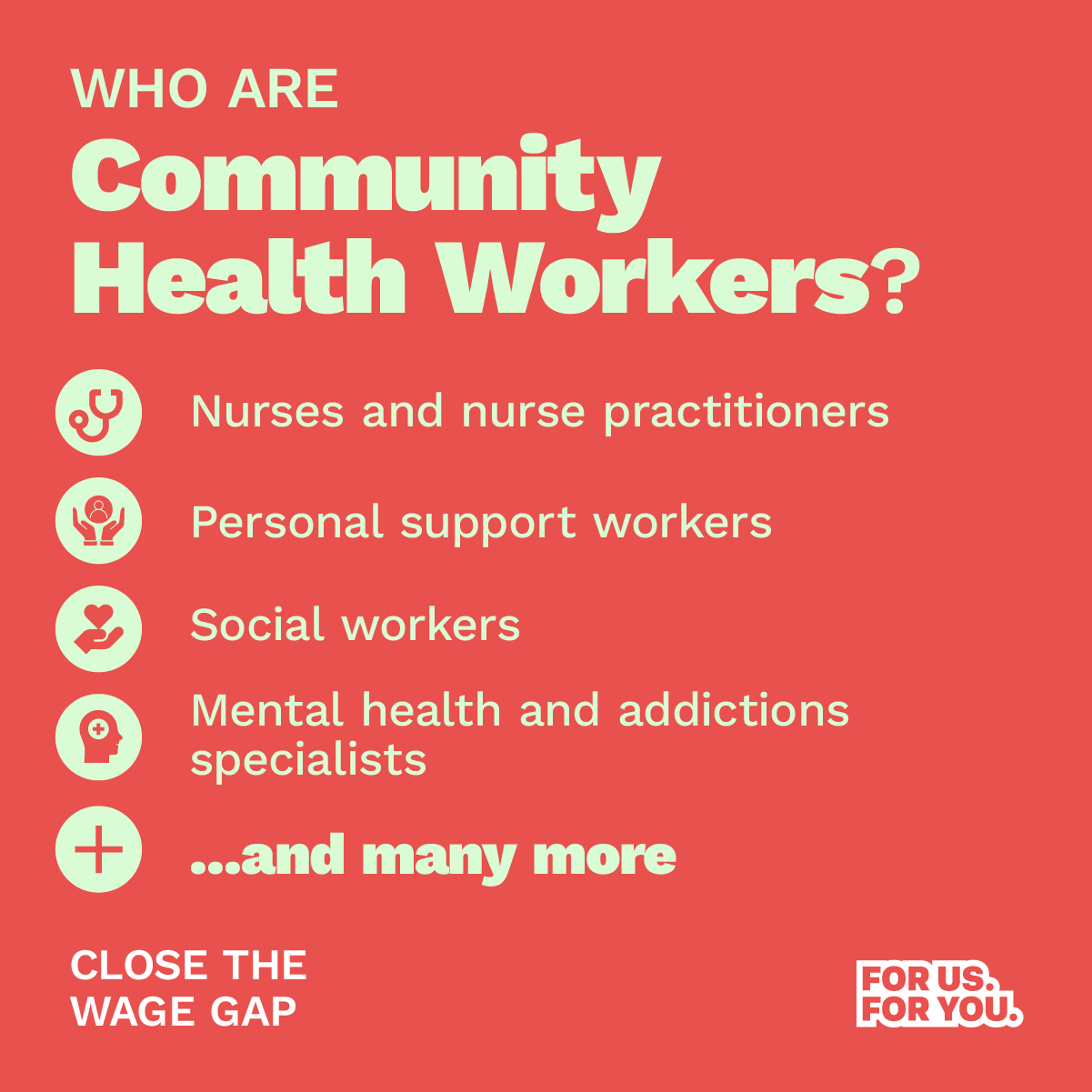
Ontario’s community health sector is made up of over 200,000 workers in primary care, mental health and addictions organizations, home and community care, long-term care, and other community health settings. These workers help provide the right care in the right setting and keep Ontarians out of busy emergency departments and hospitals.
Despite their critical roles and the rising cost of living, community health workers face a combined wage gap of over $2 billion compared to their peers doing similar work in other publicly funded settings, including in hospitals and schools.
This growing wage gap is causing unprecedented staffing shortages, impacting the care Ontarians rely on. A recent survey conducted by the associations indicated that 94 per cent of community health organizations identify compensation as the biggest challenge with hiring and keeping staff. As a result, over 80 per cent are seeing wait times for services and supports continue to grow.
For Us. For You. wants to work with Ontario’s government to:
- Invest over $500 million each year over the next five years to close the wage gap, in addition to sustainable and ongoing annual increases in line with projected inflation;
- Address Bill 124 shortfalls that continue to impact the community health sector; and
- Establish a working group with government to develop a sustainable approach to building and supporting the community health sector workforce.
Closing the wage gap means care in the community will be there when the people of Ontario need it, now and in the future.
QUOTES
“The growing wage gap is more than just a financial issue – it threatens the very foundation of care in Ontario’s communities. Rising staffing shortages and increasing wait times for mental health and addictions services have put the health and well-being of Ontarians at risk. Paying community health workers fair wages means better access to care, when and where it is needed. Our coalition is ready to work together with this government to close the wage gap and build a community health sector that meets the needs of all Ontarians.”
- Karen O’Connor, CEO, Addictions and Mental Health Ontario
"Not-for-profit seniors' care providers, including long-term care, have faced a staffing crisis for many years now, including well before the pandemic. We're asking the government to close the $2-billion wage gap for community health workers, so we can ensure that staff in senior care and other community settings receive equal wages for equal work, and to ensure our members are properly staffed to give Ontario's seniors the care they need, when they need it."
- Lisa Levin, CEO, AdvantAge Ontario
“Community health workers – from dietitians and physiotherapists to nurses and health promoters, and everyone else who helps make up the primary health care team – are the foundation of our health system. These folks are the core members of community health organizations, which people in Ontario depend on every single day to stay well and out of the hospital. Community health workers, and the teams they are part of, are being left behind. Many teams in Ontario have staffing gaps due to the wage inequities that unequal pay creates. For health care to be convenient and connected and delivered in the community, we need the Ontario government to step up now and pay community health workers fairly. The local health care services that people in communities across the province expect to be there for them require urgent government support, so we can recruit and retain dedicated and committed staff in the months and years ahead.”
- Sarah Hobbs, CEO, Alliance for Healthier Communities
“Primary care teams are experiencing ongoing recruitment and retention challenges, driven by wage disparities and the inability to offer competitive compensation. These staffing shortages result in fewer professionals available to provide the care patients need, leading to delays and reduced access to services. Addressing pay parity is a practical and necessary step to ensure we can attract and retain the skilled professionals required to maintain consistent, high-quality primary care for all Ontarians.”
- Dr. Kevin Samson, President, Association of Family Health Teams of Ontario
“The community mental health and addictions workforce continues to struggle with staff retention and difficulty attracting new workers at a time when there is a surge in demand for our services. Meanwhile, the wage gap for the community health sector continues to grow. Our staff deserve to be paid an equivalent living wage as that of their counterparts in health and other sectors so that they can focus on providing quality care for Ontarians.”
- Camille Quenneville, CEO, Canadian Mental Health Association Ontario
“There is a crisis in child and youth mental health that we can’t solve without addressing workforce shortages. Too many families are turning to hospitals in distress because of long wait times and a lack of treatment availability at community-based child and youth mental health centres. This is further exacerbated by frontline vacancies and high turnover because our wages can’t compete with hospitals and schools.”
- Tatum Wilson, CEO, Children’s Mental Health Ontario
“By addressing wage disparity, we can strengthen the entire system and ensure that Ontarians have access to the comprehensive care they need, when and where they need it.”
- Susan Somogyi, CEO, Family Service Ontario
“For Indigenous communities and the Indigenous primary health care organizations that serve them, community health workers are inclusive of Traditional Healing practitioners that play a key role in ensuring that First Nations, Inuit, and Métis peoples have access to culturally safe care spaces for integrated primary health care. The health human resources crises due to the growing wage gap leads to an inability to retain staff to continue creating and sustaining culturally safe environments. Addressing the wage gap means putting funding and resources in place to ensure community health workers are compensated equitably so that they can continue to advance Indigenous cultural safety in all care spaces.”
- Caroline Lidstone- Jones, CEO, Indigenous Primary Health Care Council
“Primary care has been battling a human resources crisis for the past three years that continues to escalate, fueled by wage inequalities and a lack of government investment in our highly valuable and skilled workforce. Recruitment and retention issues have become a daily concern as staff vacancy and turnover rates have reached 40 per cent annually. Primary care is not sustainable as the foundation of the health care system if we do not receive an ongoing equitable investment to keep the workforce in place.”
- Valerie Winberg, President, Nurse Practitioner-Led Clinic Association
“Ontario’s entire community health sector is facing a staffing crisis caused by the wage gap. In the home and community care sector, organizations are battling 20 per cent average frontline vacancy rates, and it is becoming more difficult to recruit and retain the workers we need. The government needs to continue to invest in the home and community care workforce to close the wage gap and ensure that Ontarians have access to the right care in the right place.”
- Deborah Simon, CEO, Ontario Community Support Association
About the Campaign: For Us. For You. represents Ontario’s community health sector coming together in support of our workers and the Ontarians we care for. The campaign is a collaborative effort by 10 provincial associations, representing over 200,000 community workers who together care for millions of Ontarians, seeking to work with the Ontario government to find solutions for the health human resources facing the sector.
The associations include:
- Addictions and Mental Health Ontario;
- AdvantAge Ontario;
- Alliance for Healthier Communities;
- Association of Family Health Teams of Ontario;
- Canadian Mental Health Association Ontario;
- Children’s Mental Health Ontario;
- Family Service Ontario;
- Indigenous Primary Health Care Council
- Nurse Practitioner-Led Clinic Association
- Ontario Community Support Association
For media inquiries or further information, please contact:
Karla Sealy (she/her)
Manager of Communications
416-256-3010/1-800-267-6272, ext 242
Share
More Updates