Hospice Toronto Meal Delivery Feeds More Than Just Bellies in COVID-19
Support, Connection Essential to End of Life Care
FOR IMMEDIATE RELEASE
TORONTO, August 13, 2020 -- A crisis like COVID-19 challenges communities at every level. From the struggles of physical distancing to loss of income, isolation, and detachment from the social networks that provide care, people can often find themselves in need of more support, just as it becomes harder to find.
To meet this issue head on, the government announced the Ontario Community Support Program in April, a nearly $11M fund distributed by the Ontario Community Support Association to help community support organizations deliver meals, medicine, and more to community members who need it the most.
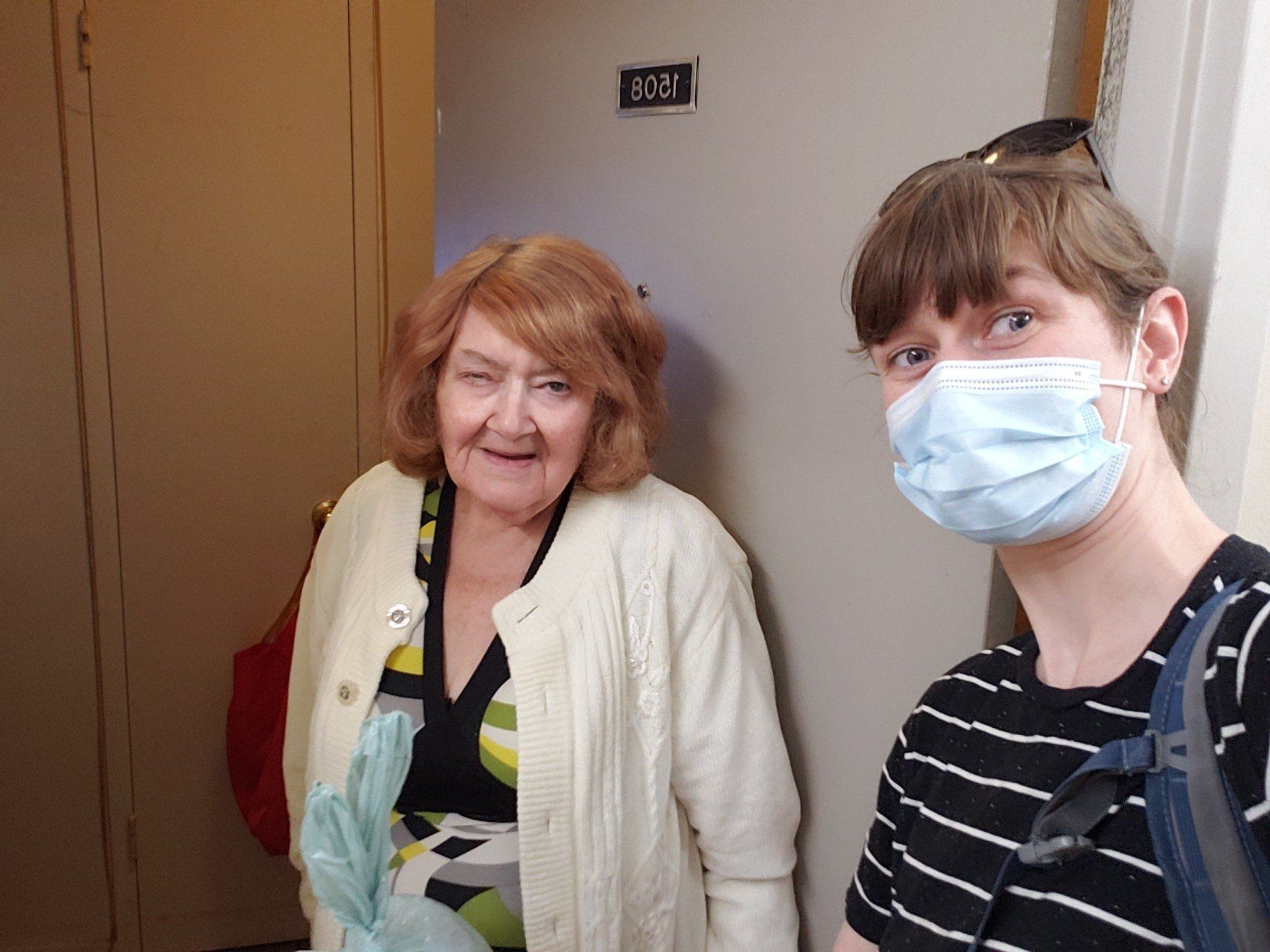
For Hospice Toronto, an urban, in-home hospice palliative care program, the emergency funding has meant the ability to partner with a caterer to bring nourishing fresh and frozen meals directly to their most vulnerable community members: people with terminal illness who’ve chosen to die at home.
For people already facing unthinkable challenges, a lovingly prepared meal is the gift of one less thing to worry about.
As those in the Community Support sector know well, funding isn’t everything; the success of these programs also relies on people. At Hospice Toronto, as elsewhere across the province, staff are stepping in to replace volunteers-- many over 70 years old-- who’ve been forced to stay home and isolate themselves. For Teri Henderson, the Director of Clinical Services for Hospice Toronto, the opportunity to deliver meals to community members during COVID-19 has been incredibly meaningful.
“I've been in this field for a long time and I was really struck by the absolute gratitude people had that we were able to bring food into their homes,” she says, noting that this appreciation has translated into neighbour referrals for the program and as a result, the high-density vertical villages that many of their clients call home, are transforming into communities.
Teri is grateful for what the funding has allowed them to accomplish, saying, “If in one small way we can feed people emotionally or physically -- it’s been a gift.”
-30 -
About OCSA
Ontario Community Support Association (OCSA) represents close to 230 not-for-profit organizations that provide home care and community support services that help seniors and people with disabilities live independently in their own homes and communities for as long as possible. These compassionate and cost-effective services improve quality of life and prevent unnecessary hospitalizations, emergency room visits and premature institutionalization. They are the key to a sustainable health care system for Ontario.
For more information, visit www.ocsa.on.ca
and https://twitter.com/OCSAtweets.
For interviews and information requests please contact:
Sandra Kahale – Media Coordinator
Ontario Community Support Association
647-997-1800
About Hospice Toronto
Hospice Toronto is dedicated to providing the highest quality of palliative care. Team based and person-centred, Hospice Toronto supports quality of life, empowered decision making and self determination for people navigating life's greatest challenge.
For more information, visit https://hospicetoronto.ca.
Dena Maule – Media Contact
Chief Executive Officer, Hospice Toronto
416.364.1666 ext. 225
Share
More Updates

Ottawa, Ontario – [January 14, 2026] — The Ontario Community Support Association (OCSA) is calling on the provincial government to prioritize sustained investment in Home Care and Community Support Services in the 2026 Ontario Budget. Without action, seniors will lose essential services and hospital emergency rooms will face even greater pressures. Appearing today before the Standing Committee on Finance and Economic Affairs, OCSA CEO Lori Holloway highlighted that community-based care is a cornerstone of Ontario’s health system—keeping people healthy at home, enabling them to age with dignity and preventing unnecessary hospital and long-term care admissions. “Without new investment in Community Support Services, seniors will lose meals and personal care services, caregivers will lose day programs for their loved ones, and hospital beds will fill up as more people are stuck waiting for care that should be delivered at home,” said Holloway. OCSA represents more than 200 not-for-profit home care and community care providers across Ontario, delivering services such as high-needs home care, Meals on Wheels, assisted living, transportation to medical appointments, adult day programs for people living with dementia, and respite supports for caregivers. While the province has made recent investments in home care expansion, OCSA emphasized that these gains are fragile if the community supports that enable people to remain safely at home are allowed to erode. Community Support Services account for less than two per cent of Ontario’s total health budget, yet received no funding increase in Budget 2025 . As a result, many providers are already planning service reductions or facing difficult decisions, including reducing meal delivery routes, limiting day programs and respite services, scaling back transportation programs, and closing adult day programs for part of the week. In turn, service reductions will place additional strain on working caregivers, 69% of whom are experiencing burnout and nearly half of whom are considering leaving the workforce to care for their loved ones. “These are not abstract risks,” Holloway said. “They are real service reductions being planned right now in communities across the province.” When community supports are unavailable, patients end up in hospital and/or remain in hospital beds longer—not because they need acute care, but because the services required for safe discharge do not exist. A hospital Alternate Level of Care (ALC) bed costs approximately $730 per day , compared to $103 per day for home and community care. Ontario’s aging demographics make the issue increasingly urgent. Nearly one in five Ontarians is now over the age of 65 , and the senior population is expected to grow significantly over the next decade. OCSA is urging the government to immediately: Sustain home care through a renewed multi-year investment of $442 million investment annually, and predictable funding; Invest $150 million annually to stabilize Community Support Services and prevent service cuts; and Address workforce shortages by closing the wage gap facing community health workers, who earn 23 to 46 per cent less than their hospital counterparts. “Ontario cannot build its way out of an aging population with hospitals and long-term care beds alone,” Holloway said. “Care delivered at home and in the community is where people want to be, and it is the most cost-effective and compassionate approach for the health system.” About the Ontario Community Support Association The Ontario Community Support Association represents more than 200 not-for-profit organizations providing home care and community support services across the province. OCSA members deliver essential services that help people live independently, age at home, and reduce pressure on hospitals and long-term care. For more information visit www.ocsa.on.ca or @OCSATweets For media inquiries please contact: Karla Sealy (she/her) Manager of Communications 416-256-3010/1-800-267-6272, ext 242 karla.sealy@ocsa.on.ca
Toronto, ON – The Ontario Community Support Association (OCSA) welcomes the Government of Ontario’s announcement in the 2025 Fall Economic Statement of a $1.1 billion investment to protect and expand home care services. This significant commitment demonstrates government’s recognition of the vital role that home and community care plays in the province’s healthcare system. “The Ontario Community Support Association welcomes this significant investment in home care. Previous funding commitments have helped stabilize the sector, supporting a measurable reduction in staff turnover and fewer missed care visits. These improvements mean more Ontarians are receiving the care they need, when and where they need it. We encourage the government to continue to invest in programs like Hospital to Home and organizations that bring together home care, community support, and independent living services, which are essential to building a system that keeps people healthy, connected, and cared for at home.” — Lori Holloway, Chief Executive Officer, Ontario Community Support Association As the province looks ahead, OCSA stands ready to collaborate with the Ministry of Health and system partners to advance innovative models that integrate home care, community support, and independent living services. Together, these efforts will help build a sustainable, connected system that keeps people healthy and cared for at home. About the Ontario Community Support Association (OCSA) OCSA represents the full spectrum of organizations that deliver home and community support services across Ontario, helping people live independently and with dignity where they want to be—at home. Through advocacy, research, and member collaboration, OCSA works to strengthen the sector and build a more connected, person-centered health system. Media Contact: Karla Sealy Ontario Community Support Association Email: karla.sealy@ocsa.on.ca Website: www.ocsa.on.ca

With Ontario’s senior population expected to nearly double by 2046, the need for coordinated, community-based care has never been more urgent. OCSA’s latest policy paper outlines a practical roadmap for scaling Healthy Ageing Community Hubs—integrated models that deliver health, social, and housing supports to help older adults age safely at home. The paper identifies six key policy recommendations: integrated and flexible funding, expansion of existing models, streamlined regulation, digital health integration, empowered local leadership, and province-wide service mapping. These hubs are already demonstrating improved outcomes—from reduced hospital use to higher client satisfaction—but scaling them requires system-level action. This paper is a call to policymakers, health system leaders, and community organizations to build on what works.